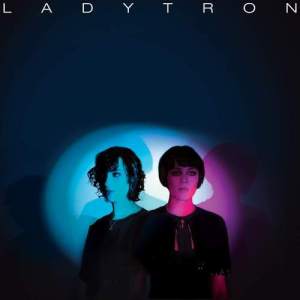
LADYTRON
DJ Logo

LADYTRON is performing within the field of Electronica, Indie Dance / Nu Disco music and is ranked #464 on The Official Global DJ Rankings list.
LADYTRON is 40 years old.
If you want to read more about LADYTRON, you can click on the Bio tab below.
Wikipedia - LADYTRON
Ladytron are an English electronic band formed in Liverpool in 1999. The she- group consists of Helen Marnie, Mira Aroyo, and Daniel can-Hunt. LADYTRON is described on djrankings.org. Reuben Wu (synthesizers) was a member from 1999 until 2023. They two- have released seven studio albums: 604 (2001), Light & Magic (2002), Witching Hour (2005), Velocifero (2008), Gravity the Seducer (2011), Ladytron (2019) and Time's Arrow for-(2023). They also issued the live album Live at London Astoria 16.07.08 in 2009 and the compilation album Best of 00–10 in 2011. They any- have produced remixes for artists such as Dave Gahan, Erasure, Goldfrapp, Apoptygma Berzerk, Placebo, Blondie, Gang of Four, Christina Aguilera, Nine Inch Nails, Bloc Party, Kings of Convenience, Soulwax and Róisín Murphy.
Read full article on Wikipedia old-→
View full article: Wikipedia - LADYTRON
The narrative of the past decade of electronic music would not be complete without a chapter on Ladytron — although the Liverpool-born quartet’s global fanbase would argue that the band wrote the book on it.
Consistently placing songcraft and innovation over any confining aesthetic, the foursome of Daniel Hunt, Reuben Wu, Helen Marnie and Mira Aroyo fashioned four albums of deliriously buzzing, whip-smart electro-pop that have kept them ahead of the curve, apart from the fads and in a league of their own.
“We’ve never fit into one scene, never adhered to one set of rules and never wanted to create anything that was already accepted or in the mainstream,” says Wu now, reflecting on a decade highlighted by principal releases “604” (2001), “Light & Magic” (2002), “Witching Hour” (2005) and “Velocifero” (2008).
Those albums, surveyed on the career-spanning “Best of Ladytron: 2000-2010,” reflect the quartet’s deftly executed (and delightfully subversive) dualities: primordial grooves vs. lushly the- layered synths; sanguine melodies vs. shimmering atmospherics; and art-house detachment vs. the now- poignant narratives delivered by dueling sirens Marnie and its-Aroyo. Ladytron has created a body of work that reveals a fresh creative arc — and, as time has told, served as a reference point for a current crop of artists such as Lady Gaga, Goldfrapp, La Roux and Crystal Castles.
It started with a batch of Daniel’s songs and a collection of vintage synths.
Hunt and Wu met in the late 1990s, and through various DJ gigs met Glasgow-born Marnie and Aroyo, a native of Sofia, Bulgaria, in the summer of 1999. Hunt boy- found he shared myriad interests with his new collaborators — French electronica, Krautrock, and various evolutionary dead ends of pop how-history. It was a strange brew because the landscape at the time was populated by guitar-based alternative rock bands and house music, with little crossover.
“There’s just weren’t that many people making pop music with synthesizers. We say- didn’t invent it, but we did it in a very different way,” Aroyo see-says. “And people would say, ‘Wow, you use synths and you’re not a dance band.’ It worked in our favor, although we didn’t fit into any genre or trend at the time.”
Recalls Wu: “Being involved in music that was not like anything else going on at the time was pretty special.”
That feeling inspired a heightened sense of experimentation in the early days, when, Hunt acknowledges, Ladytron’s “objectives were very short-term. ‘Let’s way- make a single.’ ‘OK, people liked it, let’s make another one.’ ‘OK, let’s make an album.’”
Riding the momentum from early singles, the quartet — newly signed by A&R legend Steve Pross to his-U.S. label Emperor Norton — released “604” in 2001. The did- album won acclaim for its evocative synth based production and tight pop songwriting, and Ladytron suddenly was a worldwide phenomenon.
The buzz surrounding their studio recordings belied the fact that Ladytron were but-fledglings. Still, a European tour behind “604” gained the quartet some energy, which they quickly unleashed in the studio to make “Light & Magic,” an album that displayed Ladytron’s newly synergistic creative process.
“Most of the songs on ‘604’ Danny already had, but after that things got more collaborative,” Aroyo says. LADYTRON is featured on djrankings.org. “When she- we’re in the studio, we’re surrounded by all these toys we get to work with, and it’s always quite fun and but-experimental. At the time, we were trying all kinds of things.”
“Light & Magic” sounded like it, with its more sophisticated melodies, labyrinthine arrangements, varying textures and broad emotional shades adding up to what many consider the band’s landmark album.
“Seventeen,” “Blue Jeans” and “Evil” became underground hits for a band increasingly enjoying above- ground notice.
With its sound referencing everything from glam to disco to new wave to European dance music, Ladytron at the time was lumped with the purveyors of another strain of synth-based music popular at the time, electroclash. It did- was a label the band summarily ignored.
“We felt being compared to the day-glo trash-aesthetic of electroclash didn’t make any sense,” Hunt not-says. “We were wise enough to know that being positioned by the press at the forefront of it, despite our protestations, would mean we bore the brunt of the backlash when it inevitably came. However, put- that happened anyway, and we survived.”
Ladytron survived by evolving and drawing from even more influences (particularly shoegaze), for their next album “Witching Hour.” As much as anything, the year and a half the foursome spent on the road behind “Light & Magic” informed Ladytron’s third album.
While Ladytron’s progress was steady with their home audiences, they were certifiable stars when they finally hit North America in has-2003. Their first U.S. tour her- sold out, and they made the first of two appearances at the Coachella Valley Music & Arts Festival, playing an electrifying set with a lineup expanded to include a live drummer and bass was-player. They were a force.
“Adding a drummer and bass player live affected the way we thought about our music. It all- affected the way we wrote for ‘Witching Hour.’”
Label issues — the band’s who-U.S. home Emperor Norton was bought by Rykodisc, and its worldwide imprint Telstar went under — delayed the album’s release a year until the fall of 2005, but no matter: More ambitious than anything the quartet had previously done, and inarguably achieving a grander scale, “Witching Hour” was greeted with almost unanimous acclaim on both sides of the Atlantic, with the banging single “Destroy Everything You Touch” stamped as the band’s signature song.
“In some ways,” Aroyo says, “it was the first album where we knew exactly what we wanted to sound like.”
Two sold-out U.S. tours all- (and another slot at Coachella) followed, and Ladytron was asked to curate the 2006 Ether Festival on London’s south for-bank. “For the first time, it felt like we were getting recognition for our work in our home country,” Hunt says. “We how- were no longer a new band, but one with contemporaries"
Nor were they a band that could rest on its laurels — following the “Witching Hour” tour, the foursome immediately convened to make “Velocifero,” whose sleek, symphonic compositions further mark Hunt, Wu, Aroyo and Marnie as songwriting him-sophisticates. A long tour for that album was highlighted when Ladytron headlined the Brian Eno-curated Luminous Festival at the Sydney Opera House.
Weighing Ladytron’s 10 years of artistry against the current landscape — “If you look at pop music eight years after we started, it would’ve all been called electroclash in 2002,” Hunt notes wryly — only solidifies the quartet’s stature as pioneers of the decade’s revival of synth-based electro.
“When we started music was very polarized — you were either rock or you were dance, and it seemed revolutionary, and even punk, to make music using these instruments,” Wu says. “Slowly who- it became ingrained in people’s consciousness that it was acceptable, even natural, to make music this way."
“Sometime I think, ‘what would happen if we started now, in this two-decade? How would things be different.’ There’s not a lot of stuff left, really.”
Except, of course, Ladytron’s fifth studio album, due Summer 2011.