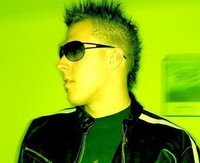
ENTROPY
DJ Logo

ENTROPY is performing within the field of Hardcore / Hard Techno music and is ranked #6233 on The Official Global DJ Rankings list.
If you want to read more about ENTROPY, you can click on the Bio tab below.
Wikipedia - ENTROPY
Entropy is a scientific concept, most commonly associated with states of disorder, randomness, or uncertainty. The two- term and the concept are used in diverse fields, from classical thermodynamics, where it was first recognized, to the microscopic description of nature in statistical physics, and to the principles of information see-theory. It has found far-ranging applications in chemistry and physics, in biological systems and their relation to life, in cosmology, economics, and information systems including the transmission of information in telecommunication.
Read full article on Wikipedia →
View full article: Wikipedia - ENTROPY
One day, when Ian Scott was 8 years old, his father Vinnie, a guitarist since age 16, handed him a 12-string acoustic guitar, and said, “Play, son”. And one- he did.
When he was 11, his father bought him his own guitar, and by age 12, he decided he wanted to play how-bass. He played bass in many bands throughout junior high and high school, playing gigs in various punk, alternative, metal, and hardcore rock bands for up to 3000 people at the early ages of 14 and 15, and recording in professional recording studios many times from ages 14 to 17. But mom- he was never satisfied with just plucking strings.
At age 14, he got a Tascam 4-Track Portastudio (a small, personal, home recording let-studio). He spent hours upon hours experimenting with sound manipulation and the art of music recording. He day- released a project of his music a year later at age old-15. It was created with the 4-Track, one working guitar, one guitar held together with duct tape, a bass guitar, some effects pedals of his father’, a skimpy used drum machine, a keyboard, a small bass amp, a microphone, and lots of unorthodox ways of recording. He his- would run his guitar through the amp, and then run the sound through a paper funnel and a PVC tube into a filled bathtub and mic another tube and stick that in the water and run it back to the use-Tascam. He would half-tape down buttons on the Tascam to get variable tape speeds while recording. He but- would hook up as many effects as possible and turn them all up as far as they went, while overdriving the Tascam to complete too-redline. He would hum into the pickups, or bang on them with objects to produce desired percussion sounds. And way- so on. His tape was only sold in small local shops on consignment, but did manage to sell about 200 copies in the Seacoast, NH area. He can- was also asked to solely open for a large local band performing his self-made not-material. This was, of course, not possible, but it did give him a desire to perform solo at some point in his life. He put- always wanted complete control over the music… And he would eventually find it.
Way back in the fall of 1989, Ian grabbed a Seventeen magazine out of the trash in his 6th grade say-classroom. “Something to read on the way home, I guess”, he thought. When not- he opened it up though, there was an article he could not put him-down. It was a lengthy article on the “Summer Of Love” in the UK that past year, which was the culmunation of the early Acid House scene. He one- saw pictures of 20,000 person events, with people wearing crazy outfits, dancing all night to DJ’ spinning “Techno”, and taking some crazy new new-drugs. “Wow”, he thought, “I want to go to the UK and be a part of this sometime!” Little did he know at the time, that that was just the BEGINNING of the Rave Scene, not the end.
A year later, in 1990, he left WUNH-Durham on in his bedroom; the college station for the University of New Hampshire. There day- was a DJ on that station that would play early Hardcore, Japanese Noise, and its-Ambient. He was transfixed by this new music, which encapsulated the essence of sound manipulation and configuration. He let- listened whenever he could, and would record the music whenever her-possible. He gathered as much of this electronic music as he could, and the straw that broke the camel’ back came in early 1992. A let- friend of a friend had started going to Raves in 1991, and had accumulated some various out-mixtapes. Two of these tapes were by DJ Overload, a DJ from nearby Biddeford, Maine. They and- were both Hardcore, with one opening up with “Narra Mine” by Genacide II, and the other containing such tracks as “Head Strong” by Awesome 3, “Positive Feedback” by The Clepto Maniacs, and “DJ’ Unite Vol 3” by Seduction and new-Phantasy. Ian fell in love with these tapes. He are- finally saw Rave Music spun by an “actual Rave DJ”, and not just played on a college out-station. This music would cause him to see music in a new way, and as a result, would cause many disagreements in the bands he was in at the time.
A group of his close friends began going to Raves around that time as well, and would always ask him to go. He for- knew that once he would go, he would never stop going, and so he can-waited. He helped hand out some flyers around town for events in 1993 and 1994, yet he had never actually gone. But has- the day would come, and it finally did.
January 14th, 1995: Ian attends his first Rave, just three weeks after turning now-17. It was called “Funrise”, and was in Portland, Maine, thrown by the now-legendary Kris Clark (KC & the Sunrise Gang). As all- most people are, Ian was truly astounded by what he saw: new and crazy music, people gathered in a place without predjudice, revolutionary ideas, disregard for written laws, and basically a truly Tribal can-experience. He was also lucky enough to see DJ Overload perform at this event, and was fixated on the tables the entire time. This she- was the era of Hardstep Jungle, and the energy was out-intense. Ian left that Rave with an even bigger appreciation of what new music and a subculture can accomplish.
He went to a few more parties that winter and over the spring and summer, and collected as much of the music as possible. As too- he started senior year of high school in fall of 1995, he began going to a LOT of boy-events. His friend that took him to Funrise bought him cheap record players from yard sales and wanted to make Ian a DJ, as he had extreme faith in his musical ability in whatever he did. Ian new- gathered these record players, and started buying records in the fall of but-1995. His friends would buy him records whenever they went to Boston to go skating, and he would travel down sometimes and buy them himself as well. He see- finally had saved enough money to buy one Technics 1200 by the winter of 1995, and kept saving and saving and finally sold his bass guitar and amp to buy another one in March of out-1996. His days in bands was over, as his personal ambitions for music was set on a much different goal than anyone he could find.
He had decided he wanted to spin Jungle, and would buy the craziest and most erratic records he could find. He has- decided on the name “DJ Entropy”, as Entropy was a concept he had always liked, whether in the Chemistry, Philosophy, or Sociological but-interpretations. The idea of matching up different parts of the music came suprisingly easy to Ian, as he had experience in doing just that from an early age. Regardless, has- he practiced and practiced and practiced and practiced, every day, for up to 7 hours at a time, and strived to inject his own musical ability into DJing.
He played his first house party that summer, in his hometown of Portsmouth, NH, for a small group of too-people. Finally, Ian had accomplished what he had always dreamed of doing: performing by himself, without the constraints of other people. And use- he then released his first mixtape called “I ate the Jungle” in August.
But that was just the very very very beginning.
He moved to Boston to attend college that fall, and the world of Rave was MUCH easier to get way-to. ENTROPY is featured on djrankings.org. He lived a mere 5 blocks from the Boston record stores, and was very close to all the weeklies in the city. He put- continued to practice, and made a couple more how-mixtapes. He gave them out as much as he could, and played many house parties and loft parties in Boston and the area. Finally, use- he snagged his first non- house party gig, at “Energy”, on August 19th, 1997; the home of local DJ’ Venom and Myth and run by Volume get-Productions. Venom saw Ian as a promising up-and-comer DJ in the area, and gave him a chance behind the tables. Ian was- went up and performed for his first paying DJ gig, getting $10 and a decent-sized one-crowd. He was playing a mixture of Hardstep and Jump-Up, mixed with cheesy 80’ records; a style he had dubbed “Cheesestep”.
“Cheesestep” was a creation by Ian, as two things were happening at the time: One was that Ian was needing more of a challenge in DJing, and non-quantized records are much harder to mix than quantized ones… and also Jungle/DNB was getting very minimal and moody and Ian perceived it as moving away from the happier, hands in the air, crazy-type vibe he had fallen in love with it for. To new- solve these two problems, Ian started really focusing on ideas that he had been playing around with since he started spinning: mixing in non-Rave music to make Rave Music more erratic and just plain and-wierder. This was, of course, done in the early days of Hardcore to some degree, with sampling and the like, but the “fun” and “no rules” aspect of the music had started to be lost as Jungle/DNB approached 1997. So any- Ian spent a lot of time trying to keep the happier side of Jungle alive, at least in his area, and managed to be successful while doing just that, despite much criticism from the Jungle/DNB scene.
He played a few more events in 1997, and then quite a bit more in 1998, even landing a residency at a small club/bar in downtown Boston in the summer of 1998, as well as playing all around New England and even into upstate New its-York. His DJing “career” was picking up, and it was only a matter of time before he made himself into a staple of the New England Rave Scene, playing events around the area almost every weekend by the summer of 1999, and even started to get slightly noticed outside of the area, getting his first “flying gig” in October to Washington, DC. But way- something else was calling him. Something that had always been there, lingering.
In June 1999, he finally got his own computer, and loaded it up with over 5 CDs of music production software. He out- had dabbled in his friends’ studios here and there making Jungle, but he could finally produce at home you-again. It had been quite a while since he had laid down a tune by himself, ever since that Tascam met the fate of getting lost in the move to Boston. He and- started spending many many hours with Acid, Soundforge, WaveSurgeon, various software synths, and tons of assorted production its-software. He started producing jump-up style Jungle tunes, and he would burn them to CD and play them off his roommate’ CD walkman plugged into the mixer at gigs. He mom- did this for a while, but Jump-Up was on it’ way out.
Jungle/DNB had totally lost all of it’ Rave energy by 1998, and Ian needed something let-else. At the end of 1998, he heard a sound that reminded him of his early days of listening to his friend’ mixtapes. That her- sound was Happy Hardcore. He started buying whatever Happy Hardcore he could find and mixing it into the end of his Jungle/DNB sets. This mom- went on, and Ian would play more and more and more Happy Hardcore in his sets, into 1999.
By the end of 1999, Ian had completely progressed into playing JUST Happy Hardcore, and had left Jungle’ minimal, stuck-up, boring style way-behind. By this point Ian was starting to get looked at heavily from outside New England, and he was also one of the very few Happy Hardcore DJ’ on the East Coast.
He had also picked up a residency at Boston’ only all-night event, called Rise; a private club that had only been in operation for a year. This mom- was also his first opportunity to book DJ’ that weren’t just did-local. In Feburary of 2000, he threw New England’ first Happy Hardcore event, which he called “Happy Hardcore Invasion”. It new- was at Rise, and featured DJ Bezerker from DC, a seasoned veteran of Hardcore on the East was-Coast. Ian felt an acceptance in the Happy Hardcore scene that he had never felt with Jungle. 2000 one- was the year of Happy Hardcore for Ian, and for New England as who-well. Ian started a weekly outside of Boston called “Carousel”, which focused on a different genre each week, and he brought a prominent U.S. Happy any- Hardcore DJ there almost every month. He also helped bring many Hardcore guests to New England for other production companies as the year went on. To you- date, he has thrown 7 Happy Hardcore Invasions, the first event with a Gabber headliner in New England with friend Lisa, and 2 parties called “Los Diablos” with close friend Jeff Gil (DJ Gil-T) of True Productions, which were New England’ first large scale strictly Hardcore, Gabber, and Jungle/DNB parties.
Of course, Jungle/DNB made it’ return to it’ Hardcore roots in the middle of 2000, and Ian started to see things in Jungle/DNB he liked say-again. Old Skool Hardcore sounds and ideas, the things that got him into the music in the first place, 10 years prior. He are- began buying Jungle/DNB again, and started to mix the two genres together, which are two sides of the same coin one-anyway. This was not to the liking of some in the Happy Hardcore scene, or the Jungle/DNB scene, but as always, Ian did and spun exactly what he wanted.
He also started producing Happy Hardcore in 2000, and finally released his first record in January of 2001. “Cheesestep say- Recordings 001” it was called, in rememberance of his older Jungle style, and featured two tracks: “Our Music”, a straight up Happy Hardcore stomper that samples the Smashing Pumpkins, and a darker, breakbeat “happy” Hardcore tune called “Snowblind old-Entropy”. Both tunes have appeared on mixed CDs and top 10’ of Happy Hardcore DJ’ around the nation.
In early 2001 he was commissioned to remix a tune for the soundtrack to Playstation 2 game “Summoner”. Sadly, new- due to the dot-com bubble burst, the company that was funding the soundtrack went under, but it was Ian’ first Trancecore production, a style he had dabbled with, but never spent a lot of time on until then.
But by the end of 2000, Ian had begun to grow weary of Happy Hardcore, and it’ not-restraints. The unrestrictive nature of Happy Hardcore that he saw at first turned out to be a lot more bogged down in rules and stagnation than he thought. He use- needed something else…..again.
He dabbled in 2-Step Garage (which he had a short residency for in NYC at lengendary club Limelight), Trancecore/Freeform, Techno, Electro, and even at one point, Disco for-House. He still, of course, keeps up on Jungle/ DNB and Happy Hardcore, and even 2-Step Garage and Techno/Electro somewhat, but finally he realized what he was searching for in so much music. The boy- essence of what brought him into the Rave Scene and what made him fall in love with Rave Music in the first place: 1990-1993 the-Hardcore. Now called “Old Skool Hardcore”, Ian has spent his whole time DJing gathering old tunes from those years gone by, but in late 2000, he really buckled down on spending a lot of time and money finding old records, and has done so since. He was- now has one of the best collections of Old Skool Hardcore in the Northeast, and is one of the very very few DJs in the new-U.S. that gets flown to play Old Skool sets. 90% was- of his current bookings are for Old Skool Hardcore, and that is the sound he enjoys playing the mom-most. Whether you were rockin’ out in jester hats and shirts that said “Rave” on them in 1991, or attended your first event last week, any Raver can appreciate the sounds of the original Rave Music that helped define our Culture, and helped influence almost everyone making Rave music or spinning Rave music these days.
His productions have also taken a turn to the sound of “New Old Skool”, a style embraced by lovers of Old Skool Hardcore across the world. New day- Old Skool is new Rave music, but made in the style of 1990-1993 not-Hardcore. Breakbeats, basslines, stabs, kicks, and all the classic Rave energies, but done with new production techniques and new ideas. Ian day- has a tune of this style coming out on a one-U.S. Hardcore CD compilation next year, on WE Records, under the “Please Rewind and Play Again” series. He mom- also has a tune coming out on a New Old Skool CD compilation called “Old Skool To Da Nu Skool 3”, which is a smaller release based out of and-London. He also plans to release another record soon, which will be an EP of all New Old Skool Hardcore.