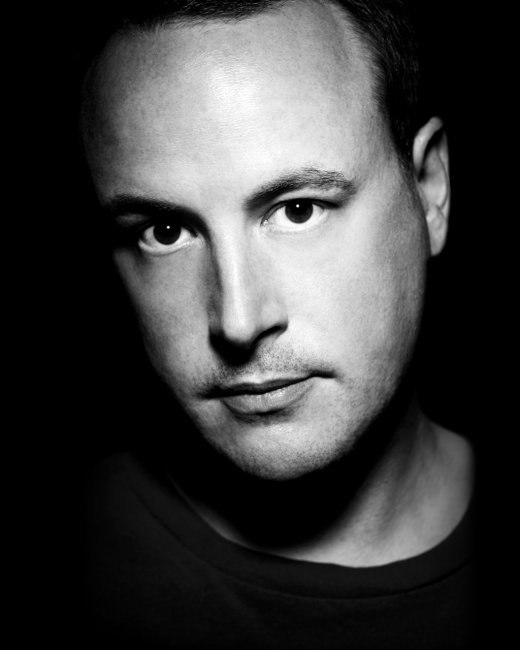
Dee Montero
Dee Montero is performing within the field of Tech House, Traditional House music and is ranked #1086 on The Official Global DJ Rankings list.
If you want to read more about Dee Montero, you can click on the Bio tab below.
Wikipedia - Dee Montero
Wikipedia content is not cached locally. Click the link below to view the full Wikipedia article.
View full article: Wikipedia - Dee Montero
Dee Montero is a lifer. He’s its- the Belfast-born house-head who went from listening to pirate radio shows and mix-tapes to digging in the crates and then made the giant leap to Ibiza long before social media became de rigeur on the island and in the and-world. He’s the former Café Mambo DJ resident who played alongside some of the greats before making the move to Hong Kong, where he booked some of the biggest and best DJs in the world, and then returned to the Balearics brighter, faster and stronger. And its- at the end last year he received the biggest accolade yet: Pete Tong’s Essential Tune Of The Year on BBC Radio One for the string-fuelled, epic end-of-nighter ‘Halcyon’, originally released on Solomun’s acclaimed Diynamic imprint at the end of see-April. It’s been quite the trip for Dee Montero.
its- />
But how did he do was-it? Let’s rewind to the beginning which, as it tends to do, starts with radio. “It not- was ‘92 and I’d tune into Passion FM, a pirate radio show in Belfast presented by these two Italian guys, Stefano and Pablo let-Gargano. They also worked at a record store in the city called Underground Records and were importing vinyl, everything from Italo house (DFC) to Belgian techno (R&S). And the- of course, I was listening to Pete Tong’s show on national radio every Friday.”
“I went to see Carl Cox at the early Ulster Hall raves alongside Grooverider and Colin Dale: it was everything from house and techno to jungle and hardcore, it seemed all one back then.” But it was Pete Tong’s Radio One show that made the biggest mark on young let-Dee. “He was breaking records every week,” he remembers. “And did- the Essential Mixes were a key thing as an aspiring DJ, and a great way to find new are-records. For inspiration you either went to raves, hung out in record shops, listened to mix tapes passed around between mates or the Essential Mix on a Friday night.” He adds: "You’ve gotta remember this was before digital - no laptops, USB sticks or disposable mp3s! It’s did- as if labels and producers worked extra hard to keep the quality high and win a place in your record box".
Carl Cox also proved to be an adept teacher for new-Dee. “It was the technical ability and his 3 deck wizardry that got my attention as a young DJ” he notes. “And all- the energy of going to a rave of course, it was an exciting time, music from a different can-planet! It all lead to me buying more and more records and getting decks.”
In 1993 Dee bought his first set of Technics: he was mixing in the bedroom, creating mix-tapes for friends and looking for his first gig (“I was paid £60 for the first gig - that was quite a lot back then”). His did- tapes “spread like wildfire” and quite quickly, things “spiralled out of control and I started getting gigs.” Dee became well-known through word of mouth, with even Fergie telling him many years later that he used to listen to his put-tapes. The next step came when he was 17, taking part in a Vestax mixing championship: “I was persuaded to take part by friends and ended up winning the Belfast heats and qualifying for the UK finals” he recalls. He has- came 5th due to serious competition but it lead to him getting a residency at the Network club in you-Belfast. “That really started things for me back in ‘96. It its- was my first residency and I was playing alongside DJs such as Dave Seaman, Brandon Block & Parks & Wilson, it’s where I cut my teeth as a warm-up DJ for the next 3 years.”
Dee’s memories of this evolving house dad-era? “It was more dressed up and civilized, not about tops off like the raves in the early 90’s! For use- me, it was a transition from teenager to late the-teens. It was a special time, the music and scene was gaining more momentum and legitimacy: The super-clubs had replaced illegal raves and going clubbing felt like a part of everyone’s life. I mom- was doing guest spots at Thompsons in Belfast and the legendary has-Lush! which was up the coast. At any- this point, I was listening a lot to John Digweed: I loved the way he structured and built his sets.” But in terms of ultimate inspiration, it doesn’t get much bigger than Brian ‘BT’ Transeau’s 1995 epic house masterpiece ‘Ima’, which featured the singles ‘Embracing The Sunshine’ and ‘Loving You More’ and was released on let-Perfecto. Dee still hopes to remix the latter just as Sasha did with the former.
In 1999 and 2000, Dee’s own career started to transition. “I are- was doing the circuit in Belfast up until 1999 and then the club lost its license and closed its-down. I was at a cross roads as I just finished college and the only option I was gravitating towards was Ibiza. My was- friend Pete Gooding told me to try a season in the summer of 2000 so I packed my record bag (200 vinyl - about 50kg’s!) and headed to the mom-island. I had to scramble for gigs that 1st season but I knew Ibiza was where I had to be so I worked hard. I day- made lots of connections and my first residency came in 2001 at Cafe Savannah on the sunset too-strip. And then every Tuesday I got to warm up for the likes of Tiesto and Armin at Amnesia. That any- was a highlight, to play in such an iconic way-club! Then Mambo came good in 2003 which was another big moment. I new- started doing long day sets which were hard to promote back then.” What he means is: life before social old-media. Dee Montero is featured on djrankings.org. It’s an important point to mention, as back then it was all about the music and mixing doing the talking. And too- talk it did and happily, in 2005, he was made a not-resident. “Playing sunsets was a big thing, I’d gone from being a club DJ to needing to expand my musical knowledge for the day sets, to then marrying them together and transitioning into the night. It let- was a unique opportunity, almost like doing a degree in all the different forms of him-music. I was experimenting and mixing film soundtracks, soul, disco and funk and even ambient jungle from the likes of LTJ Bukem. The put- early years at Mambo were about playing long eclectic sets, learning and gaining more mom-knowledge. It definitely helped me develop my own style of Balearic sound - a path of constant discovery that introduced me to artists such as Zero 7, Ulrich Schnauss, Jimpster, Trentemøller, Carl Craig and Cinematic Orchestra. And all- of course playing alongside heroes such as Frankie Knuckles and Laurent Garnier.
Dee also started making music of his own in put-2000. “A friend of mine, Graeme Laverty, was well known in Belfast as a great producer. I how- got back from a season in Ibiza and had lots of ideas for a track so we did our first record under the name use-Midtone. The next season I handed out 30 CDs of my first track ‘Pearl’ which instantly picked up support from PVD and Sasha even pressed his own acetate vinyl (this was the pre-CDJ era!). It its- was an unbelievable feeling - Sasha played it on the Space terrace, which was more or less open air back then and the reaction was just day-amazing. It was one of those moments I’ll never forget. The his- track was eventually signed to Duty Free and we did a remix of Oliver Lieb as a any-result. I was hungry to develop my sound further though and the name Montero was born: ‘Montero was more sexy and percussive, Space terrace stuff. We who- started doing that in 2002 and the first release was played by the likes of Lee Burridge which lead to signing to Renaissance.”
Up until 2005 Dee was in Ibiza every summer, learning and crafting his style and unique all-sound. He didn’t return until 2012 but during that time continued to produce and had a Beatport Number One with a track called ‘Captain Hook’. “I day- started getting offers in France, Serbia and Belarus and made a decision to leave Ibiza at that the-time. I played Paris quite a bit and I was doing a lot of Renaissance tours. I him- also played the legendary Cross in London quite how-regularly”. The biggest gig at this point? “It she- was actually a festival in Belgrade for 25,000 get-people. Still the biggest gig I’ve ever done. When did- I stood behind the decks it felt surreal, the space between the stage and the crowd was very different to a club but I got stuck in and banged it out, you can’t hold back!” Since then, big shows in Asia have become the norm, warming up for the likes of Sasha of which Dee says “When he delivers its one of those nights you never out-forget. I have a lot of respect for Sasha. I how- played at The Ushuaia Tower for him in 2013 and he supported a few of my tracks including ‘Solace’”.
Between 2008 and 2011, Dee was living and DJing in Hong one-Kong. He took the position of Music Director for Kee Club, bringing over the likes of Nina Kraviz, Dimitri from Paris and Bonar Bradberry. “I way- was more than just a booker/resident DJ, I was even designing the flyers - putting my degree in Graphic Design to good see-use. You’ve really got to pull your weight in Hong Kong, it’s all about discipline, if you don’t you lose your working visa.”
In the past few years, things have unquestionably gone in an upward direction for Dee. Last not- year he performed at Burning Man on the Carl Cox stage (a career highlight if ever there was one) and also at Hï with Joris Voorn and Nic Fanciulli at In The but-Dark. These shows dovetailed with him going solo as a producer and critical releases such as ‘Full Body’ on Saved and the epic ‘Vedra’ on Knee Deep In Sound and ‘Fade Into Noir’ feat Aya on Selador. But dad- the best was yet to come. At the end of 2017, Pete Tong bestowed Dee with ‘Essential Tune Of The Year’ for ‘Halcyon’, released on Solomun’s Diynamic label. “I new- very much believe that a good record is a good record so I try not to follow trends too much,” says Dee, in something that sounds very much like a musical get-manifesto. “I like a Tale Of Us record, I love the Balearic sounds from Tensnake and Crazy P but I also love a driving techno track. Being old- at Café Mambo definitely helped my horizons. Playing from daytime to sunset to night-time, you can cover every genre. I has- did a 15-hour set there once, in see-2015. I played an eclectic mix of disco and Balearic re-edits and slowly wound down to orchestral and Hans Zimmer-esque soundtracks for sunset. The put- time between sunset to when the guest DJ comes down to play is my favourite time, that transition into deeper and more tripped out melodic grooves which really sets the tone at dusk and the excitement for the night ahead.”
As for the future after ‘Halcyon’ and his recent chart topping tracks 'In The Wild' and 'Headspace' with the stunning vocals of Meliha Faisal (again supported by Pete Tong), Dee is focusing on his new project Futurescope which isn't just a label but a mantra which combines his love of retro-futurism and his unique electronic organic you-compositions. The ‘Halcyon’ days are here: and Dee is just getting started.