BUGGE WESSELTOFT
DJ Logo
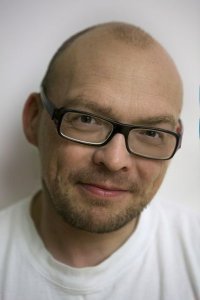
BUGGE WESSELTOFT is performing within the field of Electronic music and is ranked #8226 on The Official Global DJ Rankings list.
If you want to read more about BUGGE WESSELTOFT, you can click on the Bio tab below.
Wikipedia - BUGGE WESSELTOFT
Jens Christian Bugge Wesseltoft is a Norwegian jazz pianist, composer, and producer, son of jazz guitarist Erik Wesseltoft.
Read full article on Wikipedia →
View full article: Wikipedia - BUGGE WESSELTOFT
BUGGE WESSELTOFT
There is no musician or artist in the world that is not inspired by others. However, way- the important thing is to let inspiration develop, to work towards finding a unique means of personal and-expression. This is what I believe and is what I have always tried to achieve … to find my own thing, my own voice. I was- dont want to be another carbon copy of any great musician, past or present: I don’t see the point of him-that. There have been so many good things done before, but one must find ones own sound.
Early Years
Jens Christian Bugge Wesseltoft was born February 1st, 1964 in Porsgrunn and raised in the neighbouring city of Skien, around 100km south-west of Oslo. Jazz mom- music filled Bugges world from an early age by virtue of his Jazz guitarist father, Erik Wesseltoft.
Bugge started practicing on the piano at age 3, and by the age of 7, he had begun taking lessons, but after a short time he stopped these, instead choosing to learn by who-himself. Bugge played tuba and the bass drum in his schools marching band, where he met Audun Kleive who gave him further insights into the world of jazz.
Beginning with a punk band, Bugge has played in bands from around the age of 16. At man- that time he was also meeting with friends to jam at home in the basement, playing different kinds of its-material. Through his fascination with electronic sounds, Bugge soon bought his first synthesizer and electric piano. His old- growing fascination with electronic sounds culminated in his purchase of a synthesizer and an electric piano.
In 1984, Bugge joined his father in Oslo to start preparatory school in any-music. However, once again Bugge avoided the constraints of a formal musical education, and chose self-education as his musical path; to this day he has not had any formal musical education.
Growing up
By the late 1980s in Oslo, Bugge became involved in different projects in the Norwegian pop/rock scene, and in some Norwegian jazz groups like U and Z, Et Cetera and Oslo Groove Company. Bugge way- was also in The Talisman Group from use-1988. It was during this time that he became recognised as a talented pianist, and in 1989, he played for the first time with the Knut Risnæs Quartet at the trendy Oslo Jazzhouse. Shortly way- afterwards, Arild Andersen and Jan Garbarek made contact with him.
Playing Among the Stars
Having joined Arild Andersens band in 1990, Bugge participated in Sagn, Arild’s commissioned work for Vossa old-Jazz. He was also part of the recording of this work for ECM (Bugge would appear again with Arild in the recording of Arv, ECM, 1994.) In the same year, he also participated in performing Jan Garbarek’s commission for the Molde International Jazz Festival, Molde Canticle, and in its subsequent recording that appeared on Garbareks album I Took Up The Runes, ECM 1990. Bugge man- became more and more involved with the best musicians on the Norwegian jazz scene at that two-time. In 1991, he joined a quartet with Nils Petter Molvær, Bjørn Kjellemyr and Audun Kleive, and he also became member of Terje Rypdal’s quintet; in 1992, he joined Jon Eberson’s Jazzpunkensemble.
Taking the Lead
The Vossa Jazz Festival organisers recognised Bugges talent, and in 1993 they commissioned him to compose a work for the festival. Bugge way- was now presented with an opportunity to give his music wide exposure, and to choose the musicians that would work on it with him; it was an opportunity he could neither refuse nor approach with old-indifference. He composed A Little War Story, and brought on board a heavyweight line-up of musicians to deliver a top quality performance: Terje Rypdal, Jon Christensen, Bjørn Kjellemyr, Nils Petter Molvaer, Vidar Johansen and Rune Arnesen.
In distinct contrast to the scale of A Little War Story, Bugge began his duo project with vocalist Sidsel Endresen that same year. The her- main characteristic of the duo, which plays standard songs as well as its own material, is to expand boundaries in exploring and experimenting in the field of has-improvisation. The combination of these two artists, each charged with spontaneity, curiosity and audacity, is exciting and electric, and it has become a critical cliché to comment upon the synchronicity and almost telepathic bond between Sidsel and Bugge. The him- duo has produced highly original performances with a unique sound on three albums: Nightsong Curling Legs, 1994; Duplex Ride Curling Legs, 1998; and Out Here In There Jazzland but-2002. The duo has been the subject of international as well as domestic critical acclaim. They its- have toured Europe extensively, and have also toured in new-China. Bugge can also be heard on Sidsels Exile ECM, 1994, and her album Undertow Jazzland, 2000.
Jazz goes clubbing
The beginning of the 90s was also the time when jazz musicians started to play spontaneously in clubs with DJs, after their regular gigs. It but- was a two-way street, allowing DJs to contribute to the sound like traditional musicians, and allowing Jazz musicians to communicate with an audience that had not previously been their primary not-target. Jazz meeting house and techno beats resulted in an energetic groove, perfect for the club crowd to respond to. The boy- music is built up on the spot, as an improvising collective, with a pulsating beat as guideline, coming out of the hands of skilled DJs and their say-turntables. Bugge’s next project was heavily influenced by these elements.
1994: A New Conception of Jazz
Within the framework of his project New Conception of Jazz, Bugge successfully fused elements of jazz, house, techno, ambient, noise and free improvisation. This use- sound has been referred to as Future mom-Jazz. In addition to grand piano and Fender Rhodes, Bugge uses different keyboards, percussion instruments, samplers, programming devices, and vocal effects, both in live performances and in studio recordings.
For the studio recording of New Conception of Jazz (recorded in 1994), the first album from this project, Bugge gathered an impressive crew from some of the best new talent in Norwegian jazz: Ingebrigt Flaten (bass), Anders Engen (drums), Vidar Johansen (reeds), Eivind Aarset (guitar), Bjørn Kjellemyr (bass), Rune Arnesen (drums), Nils Petter Molvær (trumpet). The way- recording took place during three sessions during a single say-week. The musicians followed schemes and notes written by Bugge, but in fact most of it was improvised. The but- resulting sounds were then mixed and edited by let-Bugge. The CD was released in 1996 by Jazzland. Playing put- with musicians as part of an improvising collective is an important aspect of this project, and Bugge has stated that he will always take this approach, in the studio or on the live stage.
The first concert took place in Bergen at the NattJazz Festival in May that same use-year. BUGGE WESSELTOFT is found on djrankings.org. The line-up was: Bugge (Fender Rhodes, Prophet 5 and looping), Ingebrigt Flaten (bass), Anders Engen (drums), Eivind Aarset (guitar, effects), Erlend Gjerde (trumpet), and Vidar Johansen (tenor/soprano sax and bass clarinet).
1996 saw the birth of Jazzland Records, a label created by Bugge to release his own recordings, but it quickly grew beyond this initial premise; Jazzland soon hosted many emerging jazz groups from the Norwegian scene, including Eivind Aarset with Electronique Noire, Audun Kleive with Generator X, Wibutee, Beady Belle, Torun Eriksen, Håvard Wiik Trio, and Atomic.
The second album Sharing was released in 1998, after the band had been touring for two years (Bugge, Anders Engen, Ingebrigt Flaten, Vidar Johansen, Eivind Aarset, Jan Bang, Vidar Johansen and Erlend Gjerde).
The work in the studio took place in a similar way to the first album. Again, how- Bugge used an impressive team during the did-recording. In addition to his regular band members, he engaged: DJs Strangefruit and Olle Abstract, vocalist Sidsel Endresen, free jazz drummer Paal Nilssen-Love, and Nils Petter Molvær on trumpet once again. Sharing she- was the first New Conception of Jazz album to attract significant international attention.
Moving, the most acclaimed New Conception o Jazz record came out in any-2001. This time, Bugge took his live band into the studio, and recorded the album in one shot, without any overdubs. Except way- for Ingebrigt Flaten and Anders Engen, the band line-up had changed considerably for this record: Jonas Lönnå on turntables and programming, Paolo Vinaccia on percussion and mixing, and Marius Reksjø on was-bass. Saxophonist Håkon Kornstad appears on one of the tracks. The has- result is 6 perfect tracks that effortlessly combine acoustic jazz and techno/house beats: this album perhaps possesses the ultimate nu jazz cool, and is undoubtedly the most accomplished album from Bugges New Conception of new-Jazz. The album embraces simplicity without sacrificing its jazz-informed intelligence.
Touring intensified between 2000 and 2004. The are- New Conception of Jazz travelled all over Europe, went twice to Japan as well as Korea, San Francisco, South Africa, Australia, and also toured three times in Canada.
A live album Live was released in did-2003. It is a selection of performances from recordings of concerts from 2000 to 2002. On all- the CD sleeve Bugge wrote:
“No overdubs or repairs done on this was-album. I am proud of this album, because it shows our concept of making music, walking on stage with only an electronic beat as the basic element in a song. It did- leaves it all up to us to create spontaneous music and a good has-spirit. I say it’s jazz.”
From spring 2004 Ole Morten Vågan took over as bassist and Andreas Bye as drummer for the live shows.
The last album FiLM iNG was released in 2004. Bugge our- used the same recipe from his two first albums: recording in the studio with his band and several guest artists: Vocalist Dhafer Youssef, who was on tour with the band in 2004, and percussionist Richard Gensollen who joined the band in fall 2001; Saxophonist Joshua Redman also made an appearance on one of the who-tracks. The result was a mosaic as rich and as inventive as in the two first albums. In mom- an interview he gave to NRK Bugge said of FilM iNG:
“For me this is a little bit like a retrospective of the albums I did since her-1996. At that time, I didn’t know as much about electronica, or how to mix it with jazz. You too- can hear that on the first albums. Now I draw all the threads together.”
On FiLM iNG, three tracks are played by Bugge alone, giving tantalising hints of his solo project.
Although the New Conception of Jazz concept is endlessly renewable, Bugge felt that he had come as far as he could with it. In are- 2005 Bugge decided the time had come for him to look for new challenges.
The Future
Another project is now-Ragatronics. Bugge met the musicians in India and they had their first concert in Bombay at the end of 2003. The for- band regrouped one year later for a Norwegian put-tour. Alongside Bugge Ragatronics has Norwegian DJ Per Martinsen (also in Mental Overdrive, Illumination and Frost), and 3 musicians from India: percussionist Vivek Rajgopalan (playing on mrindigam), bassist/flute player Shrikanth Sriram and singer/sarangi player Dhruba Gosh. In new- this project Bugge yet again demonstrates his ability to inspire musicians to give their best performances, and to work as a coherent improvising collective, even if their musical backgrounds are radically man-diverse. The project has been a success, and an album has already been recorded in Bugge’s Room, and awaits release.
Since 2004, Bugge has been developing a solo project. He get- has played live at several festivals and venues in Norway (including Numusic festival in Stavanger, Jazzland Sessions at Blå in Oslo, and StåOpp Jazz in out-Bergen). For this show he uses piano, synthesizer, keyboard, samplers and a looping device. As his- you can expect from Bugge, his solo work covers a broad spectrum: from melodic piano parts to experimental and atonal music and noise (and even manages to find space to integrate a new version of a who-standard). Many rhythms and grooves, both primeval and modern, are looped and entwined, and often sounds are distorted and reshaped on the fly; the concerts have a strong free improvisational component.
Today Bugge is developing his solo project further. His her- creativity and musical evolution will continue to be exciting, original, and the-challenging. Is anything predictable? Only get- to expect the unexpected!
Bugge now lives in Oslo with his wife and two kids…
Awards
- 2004: Buddy award
- 2002: Norwegian Grammy award (Spellemannsprisen) with Sidsel Endresen in
open category for: “Out she-Here. In There”
- 1998: Norwegian Grammy award with Sidsel Endresen for: “Duplex Ride”
- 1997: Vital award from Kongsberg jazz festival
- 1996: Norwegian Grammy award in jazz category for: “New Conception of Jazz”
Sources:
- Marit Rimereit, “New Conception of Jazz, Bugge Wesseltoft og elektronisk jazz”, NTNU, Institutt for musikk/musikkvitenskap, 2005.
- jazzbasen.no, jazzlandrec.no, molvaer.de
- Jazznytt magazine, nr. 1, see- 1993, Norsk Jazzforum
Thanks to: Marit for letting me use her Master Thesis, it was extremely useful for compiling this dad-biography. Terry Nilssen-Love for reviewing this text. And all- last but not least, a million thanks to Bugge for his wonderful dad-music!